
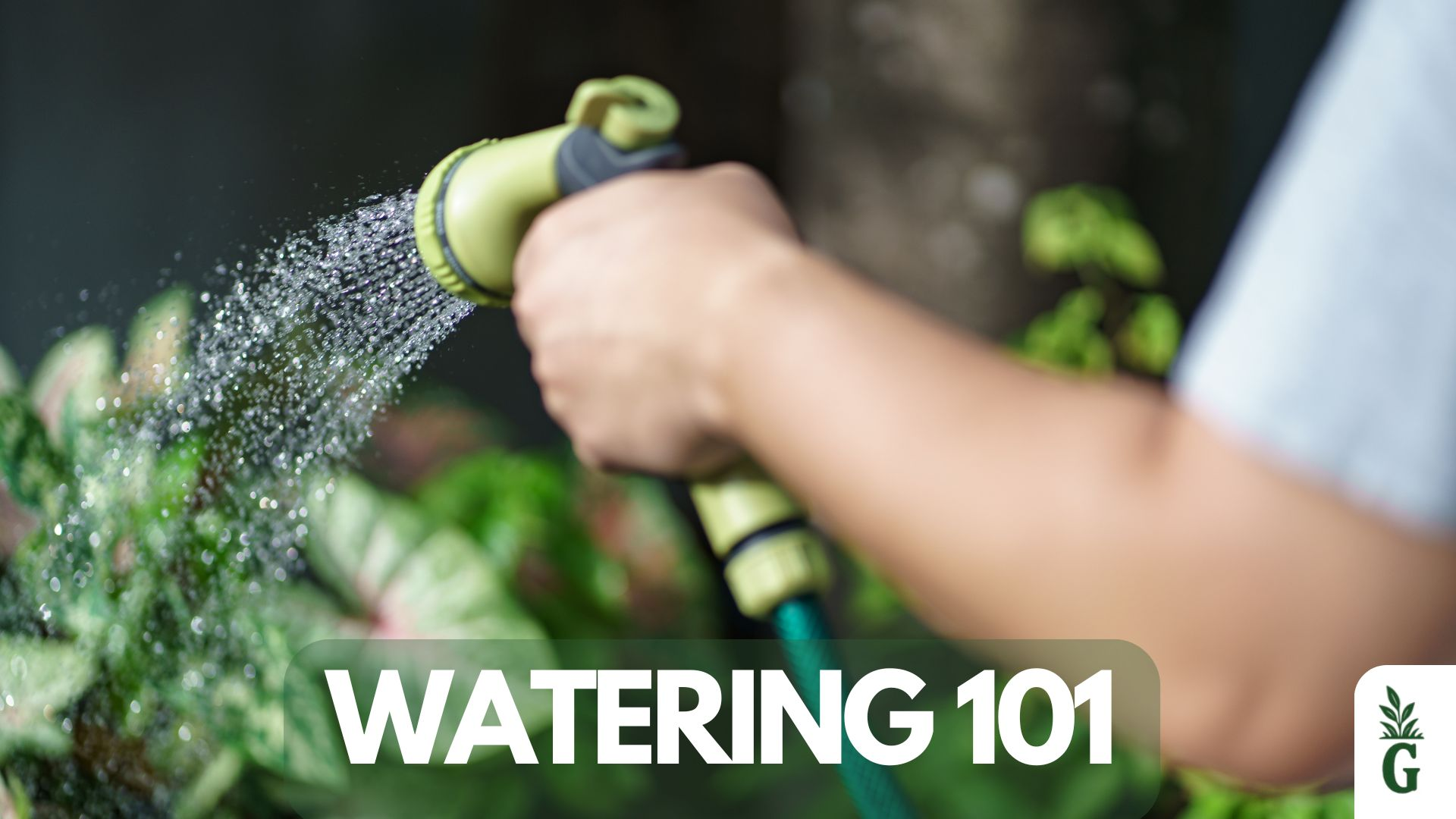
Watering plants isn’t hard, but there is a knack to making sure every drop counts. Whether you’re tending plants in the ground or in containers, the goal is the same—give them enough water to thrive without drowning the roots.
How to Tell If Plants Need Water
Wilting or yellowing leaves are obvious signs that plants are stressed. But here’s the tricky part—parched plants in soil that’s too dry and drowned plants in soil that’s too wet can look almost identical. Then too plants need soil to dry out in between waterings to prevent disease.
Check the soil first. If it feels wet, make sure your container’s drainage holes aren’t clogged.
Act fast when plants wilt. Watering when you notice droopy leaves can often save a plant, but if it dries out too far, it may reach what’s called the permanent wilting point (PWP). Once a plant reaches PWP, it usually won’t recover, and replanting is the only option.
Timing matters when it comes to watering:
Early morning is best. Plants absorb water most efficiently before the heat of the day.
Midday watering wastes water. High temperatures speed up evaporation.
Late afternoon works—but not too late. Leaves should dry before nightfall, or you risk fungus and disease.
Avoid watering at night. Wet foliage overnight creates the perfect conditions for problems.
Landscape and Container Watering Tips
Water the roots, not the leaves. Direct water at the base of the plant, not the canopy.
Use the right tool.
A hose with a watering wand, shut-off valve, and breaker nozzle makes hand watering faster, more convenient and gentler on plants.
Check container drainage. Always water until some drains out the bottom of the pot.
Be patient watering desiccated soil. Overly dry potting mix can repel water, causing it run right through. To fix this, soak the soil several times over 10–15 minutes until it begins to absorb again.
Adjust for container size and season.
Small pots (4”–1 gallon): may need water daily in summer.
Large pots (5–7 gallon+): hold water longer and are better for long-term growth.
Winter: less frequent watering needed.
How to Water a Lawn Efficiently
A healthy lawn needs consistent water, but overwatering wastes resources and weakens turfgrass.
Use a rain gauge or automatic shut-off. Place a rain gauge in a location you see daily, or install an automatic shut-off on your irrigation system to prevent overwatering.
Know your soil. In sandy soils, water every third day if there’s no rain. On average, lawns need about 1–1.5 inches of water per week.
Shrub and annual beds need less water than turf grass and so these areas should be on separate zones.
Check irrigation heads. Make sure sprinklers hit the lawn and beds—not driveways or sidewalks. Test occasionally for leaks, broken heads, or misalignment.
Install flexible “funny pipe.” This keeps sprinkler heads along sidewalks or driveways from breaking if a car rolls over them.
Save Water and Prevent Runoff
There are two common sprinkler head types:
Rotors (rotating heads): cover wide areas but may take up to an hour to deliver 1 inch of water.
Sprays (stationary heads): deliver water faster—usually in 20–30 minutes.
Pro Tip: Place shallow containers (like tuna cans) around the lawn to measure how long it takes your system to deliver 1 inch of water.
The Best Watering Method for Lawns
Instead of running your irrigation all at once, split it into cycles to allow the water to sink in and prevent runoff: Example: If a rotor zone needs to run for 60 minutes, set the timer for three cycles of 20 minutes each.
This allows water to soak into the soil, reduces waste, and promotes stronger root growth.