
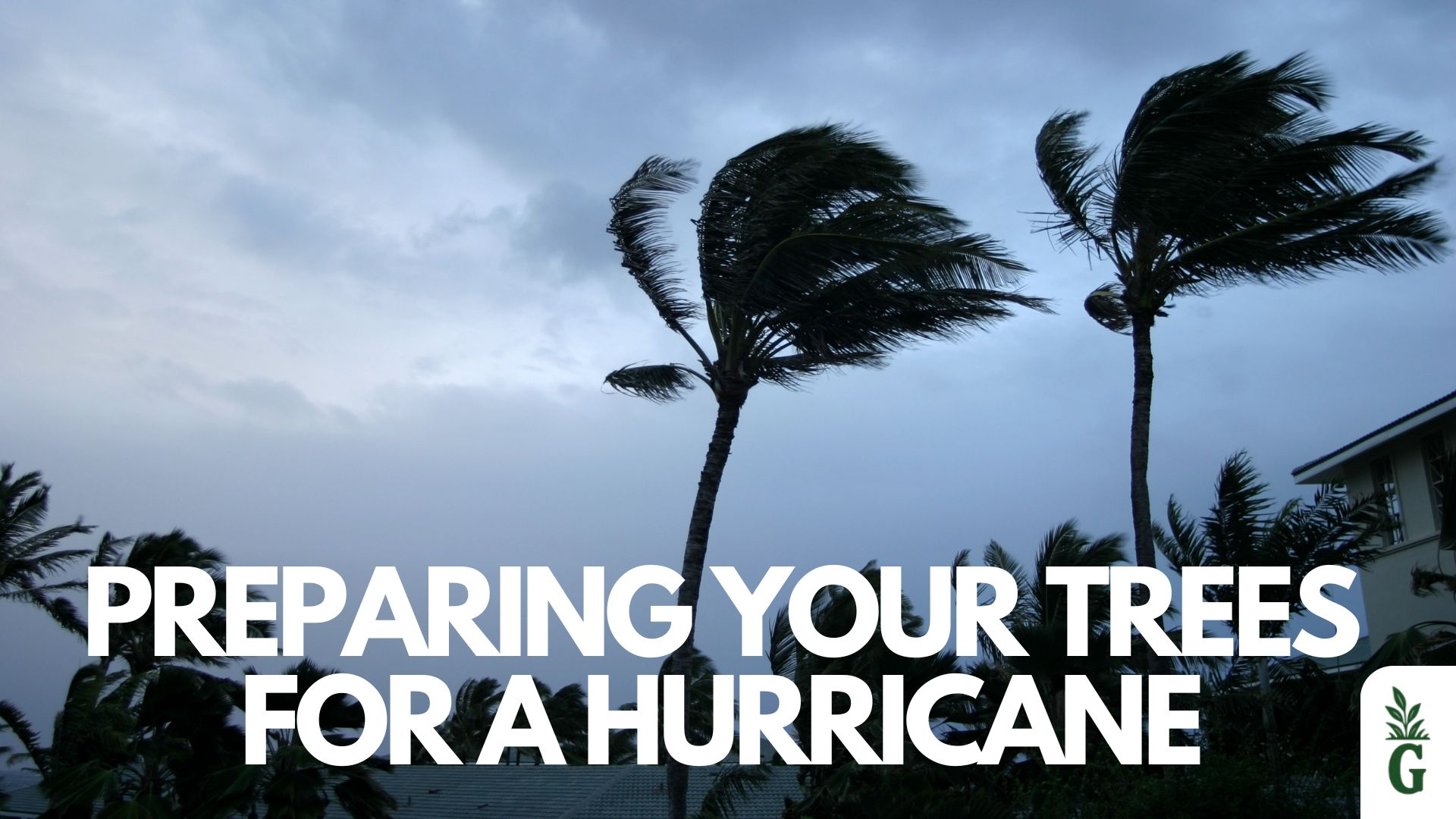
Every summer, residents of Florida and the Southeast brace for hurricane season. According to the National Oceanic and Atmospheric Administration (NOAA), forecasts call for 13–18 named storms, with up to nine hurricanes—and as many as five major hurricanes (Category 3–5). For homeowners across Florida and the Southeast, this is a reminder that now is the time to prepare your property—especially your trees.
High winds and heavy rains can topple susceptible trees. Healthy, properly maintained trees can shield your home, but weak or neglected trees can become a serious hazard. Smart preparation before storm season can make all the difference in protecting your home, family, and landscape.
This guide will help you understand how to inspect your trees, choose the right storm-resistant species, prune for safety, and prepare palms and landscapes to weather the storm.
Why Preparing Trees for Hurricanes Matters
High winds, torrential rain, and saturated soil combine to create the perfect storm for tree damage. A single falling tree can cause:
- Roof or structural damage to homes and businesses
- Downed power lines and extended power outages
- Blocked roads to work, hospitals and grocery stores.
- Costly cleanup and removal fees
By preparing trees before hurricane season, you can minimize storm damage, protect your property, and improve tree health year-round.
Inspect Your Trees Before the Storms
Start by assessing your trees for damage, disease, or structural weakness. Common warning signs include:
- Root issues – from soil compaction, previous flooding or drought, or construction damage.
- Trunk and canopy problems – cracks, decay, insect, fungus, lightning, or substandard pruning.
- Improper planting – Trees with weak root structure, poor species selection or trees planted in the wrong location.
- Weak canopy structure – crowded branches, unbalanced growth, or poor pruning history
- Disease and pests – evidence of borers, scale, termites, or decay fungi
- If you are unsure, hire a certified arborist . Professionals use tools like ultrasound tomography, resistographs, and soil tests to evaluate tree stability and health.
Early detection and correction can prevent costly storm damage.
Choosing the Right Trees for Hurricane Resistance
Not all trees withstand storms equally. Some species are notoriously weak, while others are proven survivors.
Trees with poor wind resistance include:
These species often suffer breakage or uprooting during storms.
- Sand pines and slash pines
- Laurel oaks and water oaks
- Bradford pears
- Pecan trees
- Chinese elms
- Trees with oversized or dense canopies or weak crotch angles
Hurricane-resistant trees include:

- Live oak – dependably durable, strong and storm-tested, often living 500+ years
- Southern magnolia – resilient with strong branch structure
- Gumbo limbo – flexible and well-adapted to high winds
- American Holly-deep roots and strong dense wood
- Crepe myrtle-known for bending rather than breaking
Pruning for Strength
Proper pruning improves storm durability. V shaped narrow branch to trunk angles with included bark are weak. Branches that grow at wider, U shaped 90-degree angles from the trunk form strong unions. As the tree grows, selective pruning can create a safer, more wind-resistant canopy.
Palms: Nature’s Hurricane Survivors
Palm trees are uniquely adapted to hurricanes thanks to their flexible trunks and fibrous roots. Some of the most wind-resistant palms include:
- Sabal palmetto (cabbage palm) – native to Florida, withstands winds up to 145 mph
- Washington palms
- Royal palms
- Everglades palms
 Tip: Remove coconut palm fruits before a storm. Otherwise, they can become dangerous cannon ball like projectiles in high winds.
Less wind-resistant palms include:
- Queen palms
- Chinese fan palms
- Fishtail palms
Prune and Maintain Trees for Storm Safety
- Pruning isn’t just cosmetic—it’s one of the most effective ways to prevent hurricane tree damage.
- Remove dead, diseased, or broken branches
- Thin out overly dense canopies to reduce wind resistance
- Trim branches near roofs and power lines
- Prune young trees as they grow to promote wide, strong branch angles
- Avoid improper pruning, which weakens trees and encourages weak regrowth.
First-Hand Lessons from Past Hurricanes
Living in Florida, many families remain home for Category 1–2 storms (74–110 mph winds) but evacuate during Category 3 or higher (111+ mph winds).
I’ve seen firsthand and numerous times the devastation storms can bring:
- Hurricane Andrew 1992: (South Florida) Cat 5. South Florida looked like a war zone. The sparse trees that were still standing in Homestead south of Miami, were stripped bare of leaves. Others were left leaning at 45-degree angles in the direction that the 175 mph winds blew. Chaotic piles of plant debris, smashed cars, ruined furniture and home rubble totally lined both sides of the main street through town which took nearly two years to clean up. From the front, a McDonald’s restaurant appeared untouched—until you saw the back half of the building torn away and the interior completely empty, carried away by the storm surge.
- Hurricane Helene 2024 (Augusta, GA): Downgraded from a Category 4 to a Cat 2 by the time it reached Augusta, but catastrophic. This was the first time that Augusta had experienced a hurricane. Tens of thousands of pine trees and hardwoods toppled across streets, on homes and cars, power lines were down everywhere, and seven iconic 165-year-old magnolias were uprooted and toppled. The damage, loss and impact of the widespread destruction was heartbreaking.
Final Thoughts: Building a Storm-Resistant Landscape
Southern homeowners know that hurricanes are a way of life—but tree preparation can dramatically reduce risks. By planting the right species, pruning correctly, and inspecting trees for health issues, you can protect your property, family, and community.
 Strong landscapes withstand strong storms. With thoughtful planning and maintenance, your trees can survive hurricane season—and provide beauty and shade for years to come.
 Take action now: Inspect your trees, prune wisely, and consult an arborist if needed. A little preparation today could save your home—and your trees—tomorrow.