
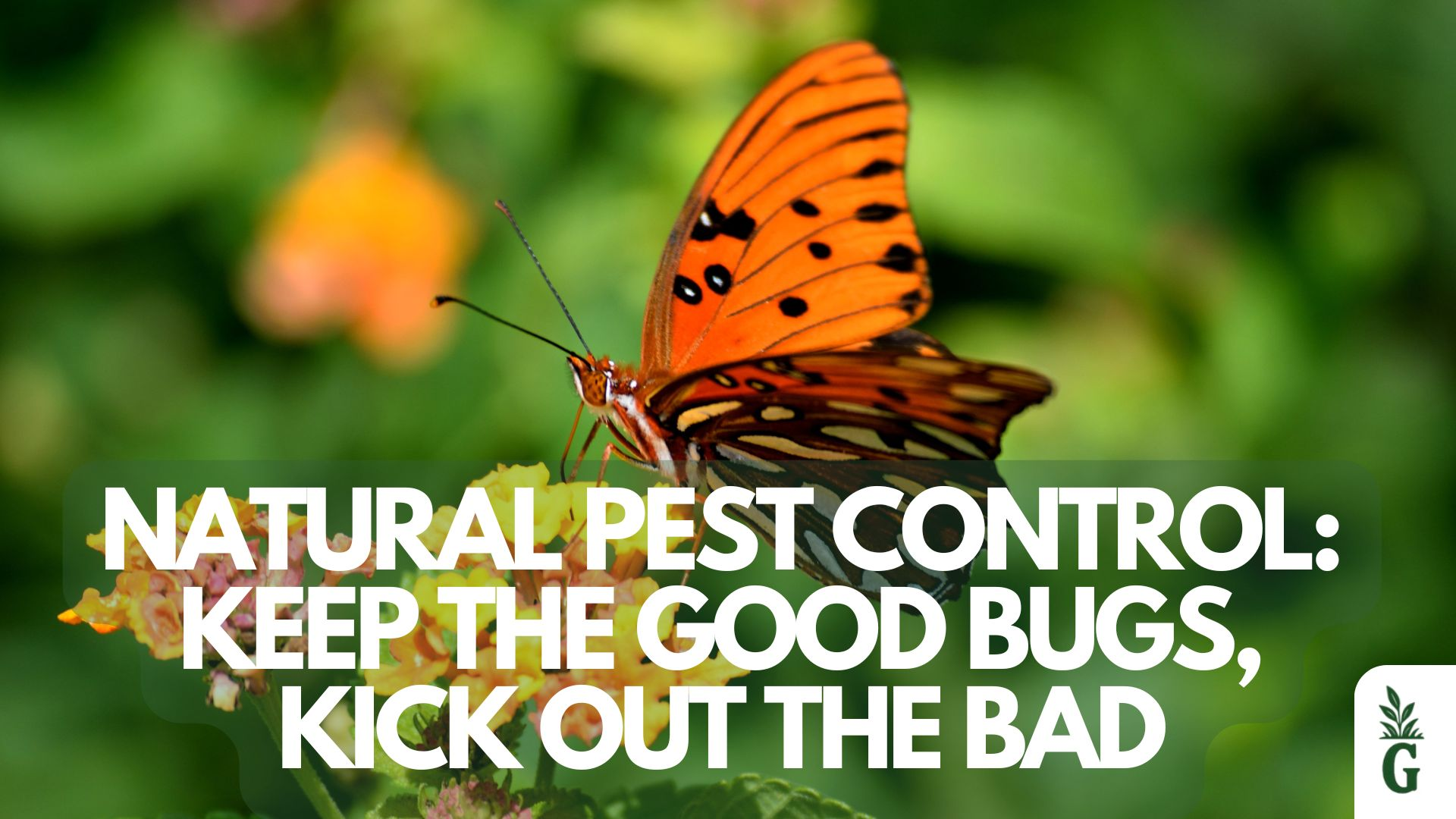
First Find a Reliable Bug Person
I am the designated bug hunter in our house. I am the bug squasher. I am the squashed bug cleaner upper. When my wife and I go out, I go first to clear her path of any dangling spider webs. I did not apply for this job. I had no previous experience. I am a man so I must be good at this. My wife doesn’t kill bugs but she will point them out and she will hand me her shoe.
Good Bugs vs. Bad Bugs
Good bugs are the heroes of the garden. Teaching a training class at our golf club, I gave the good bugs white cowboy hats and the bad bugs black hats. The white hats (ladybugs, praying mantis, lacewings) protect plants and are good guys. The black hats (aphids, scale, termites) are bad guys. The white hats are beneficial to your garden and the black hats are not.
Speaking of Spiders: Are They Friend or Foe?
Like them or not, Spiders get a bad rap. Most are harmless—and very important in a healthy environment. When my wife refuses to go into our bedroom because she saw a spider, I go in with a glass and a piece of paper, extract the spider and toss him out in the backyard. If you see spiders in your house, it means your house has other creepy crawlies-spider food-which spiders are getting rid of for you. In Asia they have large spiders that are given free reign of the house and are welcome in any home. There’s an unspoken agreement that the spiders keep the house bug free and the humans leave the spiders alone. We are not in Asia, my wife says. You are in the closet-here’s my shoe.
In Florida alone, there are over 250 spider species, but only two—black widow and brown recluse—are truly dangerous-black hats.
Integrated Pest Management (IPM)
Outdoors, I practice Integrated Pest Management (IPM)—in other words I use conventional pesticides only when absolutely necessary. Nature already provides pest control with beneficial predators like frogs, lizards, skinks, birds, snakes, neighbors cats and (yes) spiders. Even wasps eat caterpillars, flies and beetles. I prefer not to blanket spray the entire yard with insecticides that wipe out the good guys with the bad. I spot spray so as not to upset the natural balance. Blanket spraying means few predators are left, the black hats often recover first, and their populations can explode. Now your insect problem is worse than it was before.
Common-Sense Natural Pest Control Tips
The best natural pest control strategy starts with good housekeeping:
• Keep outdoor areas clear of clutter and litter.
• Store belongings in sealed plastic bins, not cardboard boxes.
• Fix leaky faucets and irrigation.
• Remove standing water which breeds mosquitoes.
• Keep window screens, porch screens, window, door seals and weather stripping in good repair.
• Caulk wall cracks and around electrical outlets.
• Trim shrubs and tree branches at least 3 feet away from walls and rooftops.
• Cover trash cans and pick up fallen fruit.
• Hand-pick larger pests (tomato hornworms, grasshopper lubbers, oleander caterpillars). A glass of soapy water equals a clean finish for black hats.
• Use a shop vac to remove insects and eggs.
• Bag and dispose of heavily infested plant clippings and infected fallen leaf litter.
• Adjust irrigation and fertilization schedules to discourage pest proliferation.
.
Predatory Insects: The Garden’s Heroes
Many insect pests are unintentional imports from other countries and don’t have natural predators here. Scientists look for their natural predators in their native lands and release these beneficial insects here to restore balance. You can often order live predators online for home use—ladybugs, lacewings, praying mantis, beneficial mites, lacewings and dragonflies. Avoid spraying chemicals when these white hats are present.
Other Biological Controls
• Beneficial bacteria, fungi, and nematodes also help suppress pests naturally.
Horticultural Oils and Insecticidal Soaps
• Horticultural oils (like neem oil or canola-based sprays) smother soft-bodied insects such as aphids, mites, whiteflies and fungi spores. Avoid using oils and soaps in hot weather or on drought-stressed plants. I’ve used cooking spray in a pinch for small infestations.
• Insecticidal soaps are non-toxic soaps that are especially formulated for plants to be effective against soft bodied insects such as aphids, spider mites, thrips and white flies. They are not to be confused with household soaps or detergents which can harm plants. Insecticidal soaps are safe to use on vegetables and are compliant with organic gardening.
Insect Netting
Fine mesh insect netting protects plants by keeping bugs out while allowing in sun, rain, and airflow. It’s especially effective for protecting young citrus trees, garden and greenhouse crops—completely pesticide-free.
When to Use Conventional Insecticides
Sometimes you have no choice. If termites threaten your house, chinch bugs invade your lawn, Asian scale attacks your cycads, or tree borers weaken your hardwoods, it’s time for chemical backup. Use the right product, apply it safely, and always follow the label.